Defense Manufacturing Readiness: Preparing for Peace, Steady, and Surge with ARMOR
October 15, 2026Manufacturing facilities rarely stay the same for long. Equipment is relocated, production lines are reconfigured, infrastructure is modified, and new technologies are introduced to meet changing operational demands. However, facility documentation does not always keep pace with these changes. Drawings that were accurate several years ago may no longer reflect actual equipment locations, structural conditions, or available space.
When manufacturers begin planning a new production line, equipment installation, or facility expansion, these discrepancies can create unexpected challenges.
Plant digitization provides a more reliable starting point.
By combining 3D laser scanning, facility modeling, and layout engineering, manufacturers can develop an accurate digital representation of their existing environment and use that information to make more informed planning decisions.
Why Accurate Facility Data Matters in Manufacturing
Effective manufacturing facility planning depends on understanding the environment in which changes will take place.
Before installing new equipment or modifying a production line, engineering teams need reliable information about existing machinery, structural elements, utilities, access points, and available floor space. When this information is incomplete or outdated, potential conflicts may not become apparent until implementation begins. For example, a proposed equipment installation may appear feasible on an existing floor plan but encounter interference from overhead piping, structural columns, or adjacent machinery once installation is underway.
These discrepancies can lead to design revisions, installation delays, additional engineering work, and unexpected project costs. Accurate facility data allows manufacturers to identify these constraints earlier, when modifications are generally easier and less costly to address.
What Is Plant Digitization?
Plant digitization is the process of capturing existing facility conditions and transforming that information into digital representations that support manufacturing engineering and planning.
Rather than relying solely on historical drawings or manual measurements, manufacturers can use detailed spatial data to better understand their current operations.
At Design Systems, Inc., our Plant Digitization service follows a connected engineering workflow:
1. Scan: Capture existing facility conditions using high-accuracy 3D laser scanning.
2. Model: Transform captured data into accurate 3D facility models.
3. Layout: Use digital models and updated facility information to evaluate equipment placement and layout modifications.
4. Recommend: Develop actionable engineering recommendations to support implementation and future planning.
Each stage builds on the previous one, transforming physical facility information into practical engineering insights.
Capturing Existing Conditions With 3D Laser Scanning
The first step in plant digitization is establishing an accurate understanding of the existing manufacturing environment.
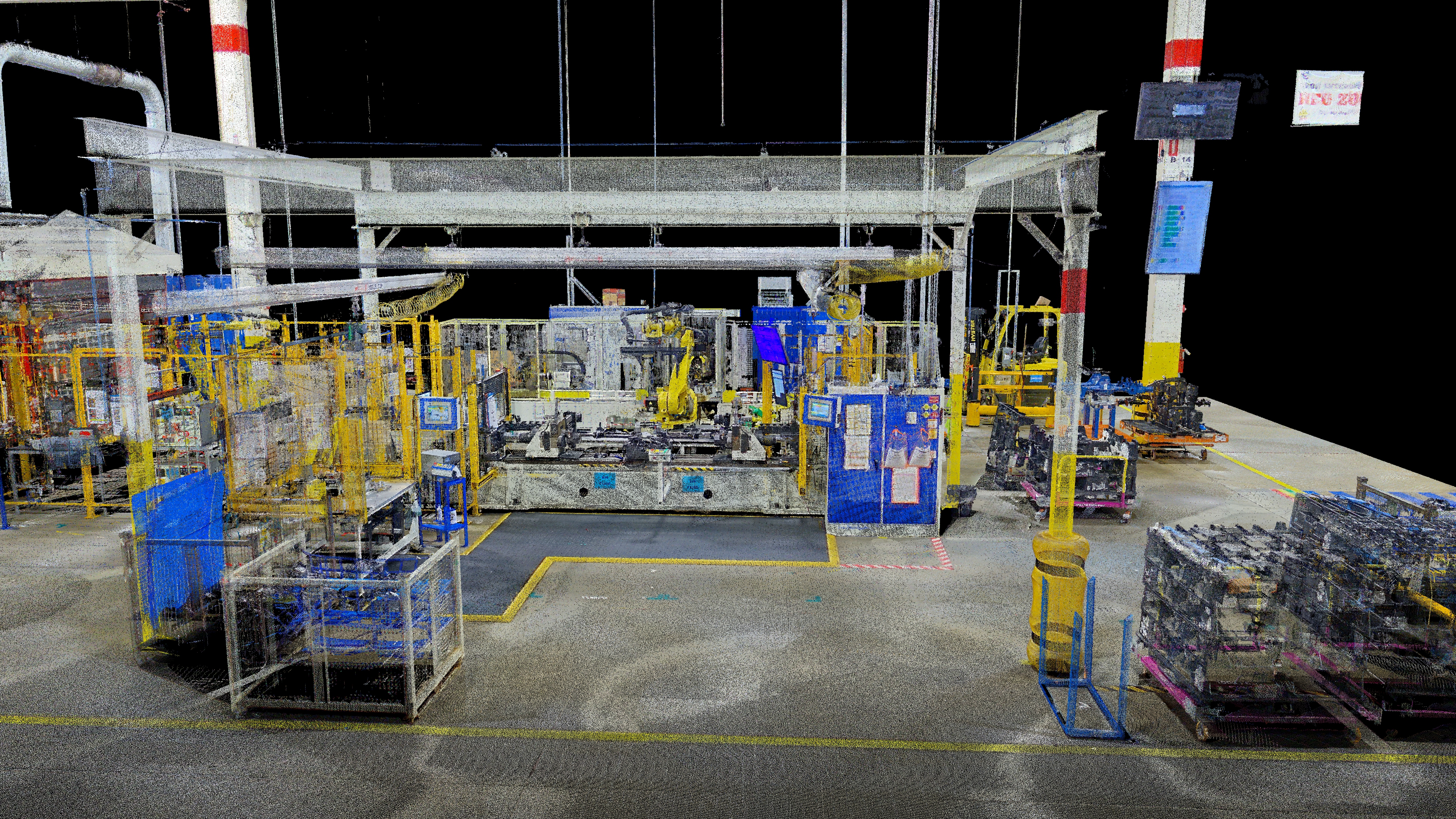
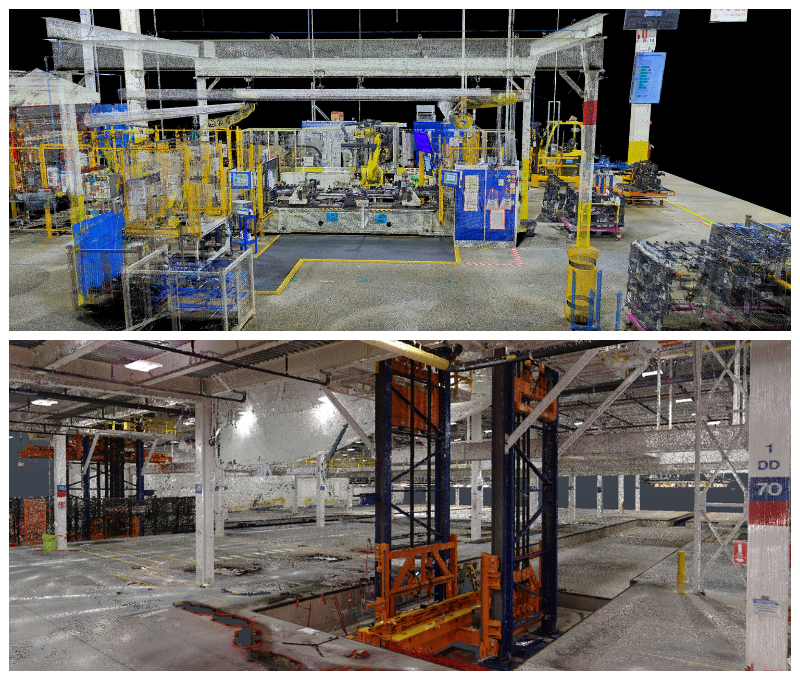
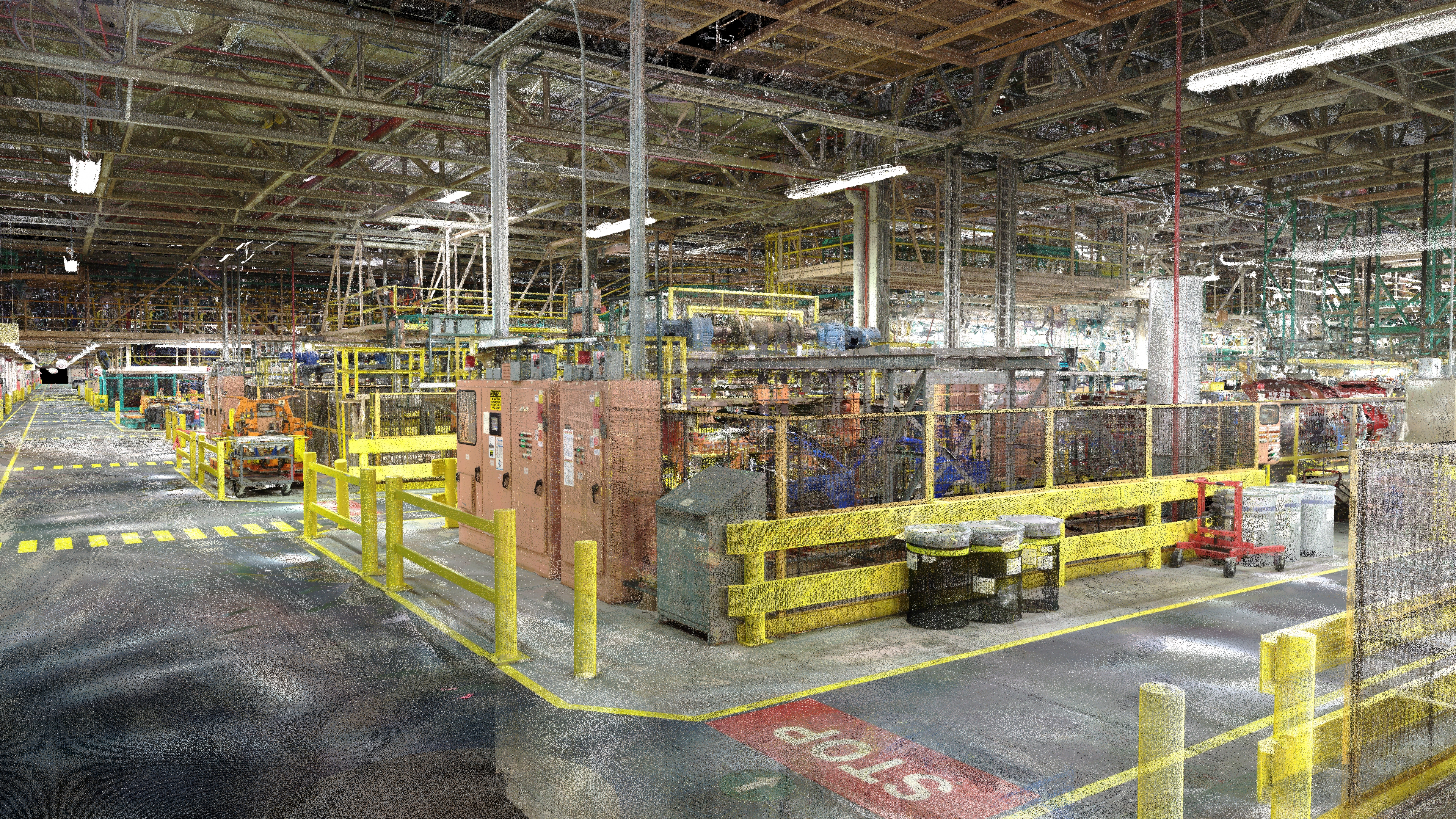
Using high-accuracy LiDAR technology, 3D laser scanning captures detailed spatial measurements of equipment, structural elements, infrastructure, and surrounding facility conditions. The collected measurements are combined into a registered point cloud, creating a digital record of the physical environment.
Unlike traditional measurements that may focus on selected dimensions, point cloud scanning captures extensive spatial information across the scanned areas. This allows engineering teams to reference existing conditions without relying exclusively on outdated documentation or repeated field measurements.
For manufacturers planning equipment relocations, production line modifications, or facility expansions, this information provides a reliable starting point for developing engineering models and evaluating proposed changes.

Transforming Scan Data Into 3D Facility Models
Once existing conditions have been captured, the next stage of plant digitization involves converting point cloud data into usable engineering models.
We develop 3D facility models that represent existing equipment, structures, and infrastructure, providing a clearer understanding of the manufacturing environment. These models can be developed to Level of Development (LOD) 200, establishing an approximate representation of existing facility components suitable for the intended planning applications.
This digital foundation can also support more advanced Industry 4.0 and digital twin applications when integrated with operational data and connected systems.
Instead of interpreting isolated measurements or outdated floor plans, engineering teams can visualize how equipment and infrastructure occupy the available space. For example, a manufacturer considering the installation of additional production equipment can use a 3D facility model to better understand spatial constraints and identify potential conflicts with existing infrastructure.

Using Digital Facility Data to Improve Layout Planning
Accurate facility models also support more informed factory layout design. When planning a new production line or modifying an existing operation, manufacturers must consider more than whether equipment physically fits within the available floor space.
Equipment placement can influence material movement, operator access, maintenance clearance, and the overall use of the facility. Using digital facility information, engineering teams can evaluate proposed layout modifications against existing conditions before physical changes begin.
This may include:
Assessing available space for new or relocated equipment.
Identifying potential interference with existing machinery, structures, or infrastructure.
Evaluating equipment placement and material flow.
Comparing alternative facility layouts.
Planning modifications that accommodate future operational requirements.
Updated 2D layouts and 3D models provide complementary views of the facility, helping teams understand both the overall arrangement and the physical constraints associated with proposed changes. The objective is to use that information to support better engineering and operational decisions.
Turning Facility Data Into Actionable Engineering Recommendations
Accurate facility documentation is most valuable when it informs real engineering decisions.
Beyond developing digital representations, we help manufacturers interpret existing conditions and identify practical opportunities to improve facility utilization, accommodate new equipment, and prepare for future operational requirements. These recommendations help connect the information captured during plant digitization with the decisions required to move a manufacturing project forward.
Consider a manufacturer preparing to expand an existing production area.
A digital representation of the facility can help engineers assess available space, understand infrastructure constraints, and compare potential equipment arrangements before selecting an approach. Rather than discovering limitations during installation, the team can use existing-condition data to evaluate alternatives earlier in the planning process. This approach supports more coordinated decisions across engineering, operations, and project stakeholders.
Want to see how the process works? Explore our Plant Digitization Roadmap for a visual overview of our approach.
Building a Digital Foundation for Future Manufacturing Projects
Plant digitization can also provide value beyond the immediate project that prompted the initial facility assessment.
Once accurate facility information has been captured and developed into usable digital models, it can serve as a reference for subsequent engineering initiatives. Manufacturers may use this foundation when planning future equipment installations, evaluating facility expansions, updating production layouts, or exploring more advanced digital manufacturing applications.
Accurate facility representations can also support broader Industry 4.0 initiatives, including the development of manufacturing digital twins when combined with the additional operational data and systems those applications require.
While plant digitization does not automatically create a fully functional digital twin, it helps establish the physical facility information needed for more advanced digital engineering capabilities. As manufacturing requirements evolve, having reliable facility documentation available can reduce the need to repeatedly reconstruct an understanding of existing conditions.
Ready to Plan Your Next Facility Project?
Whether you're planning an equipment installation, production line modification, or facility expansion, our team can help you establish a more accurate foundation for your project.
Contact us to discuss how our Plant Digitization service can support your manufacturing goals.