Manufacturing Throughput: When Facility Layout Is Limiting Production Capacity
November 17, 2026Increasing manufacturing throughput does not always require additional equipment, production lines, or facility expansion. In some operations, existing machinery has the capacity to produce more, but the surrounding facility cannot support the movement of materials and products at the same rate.
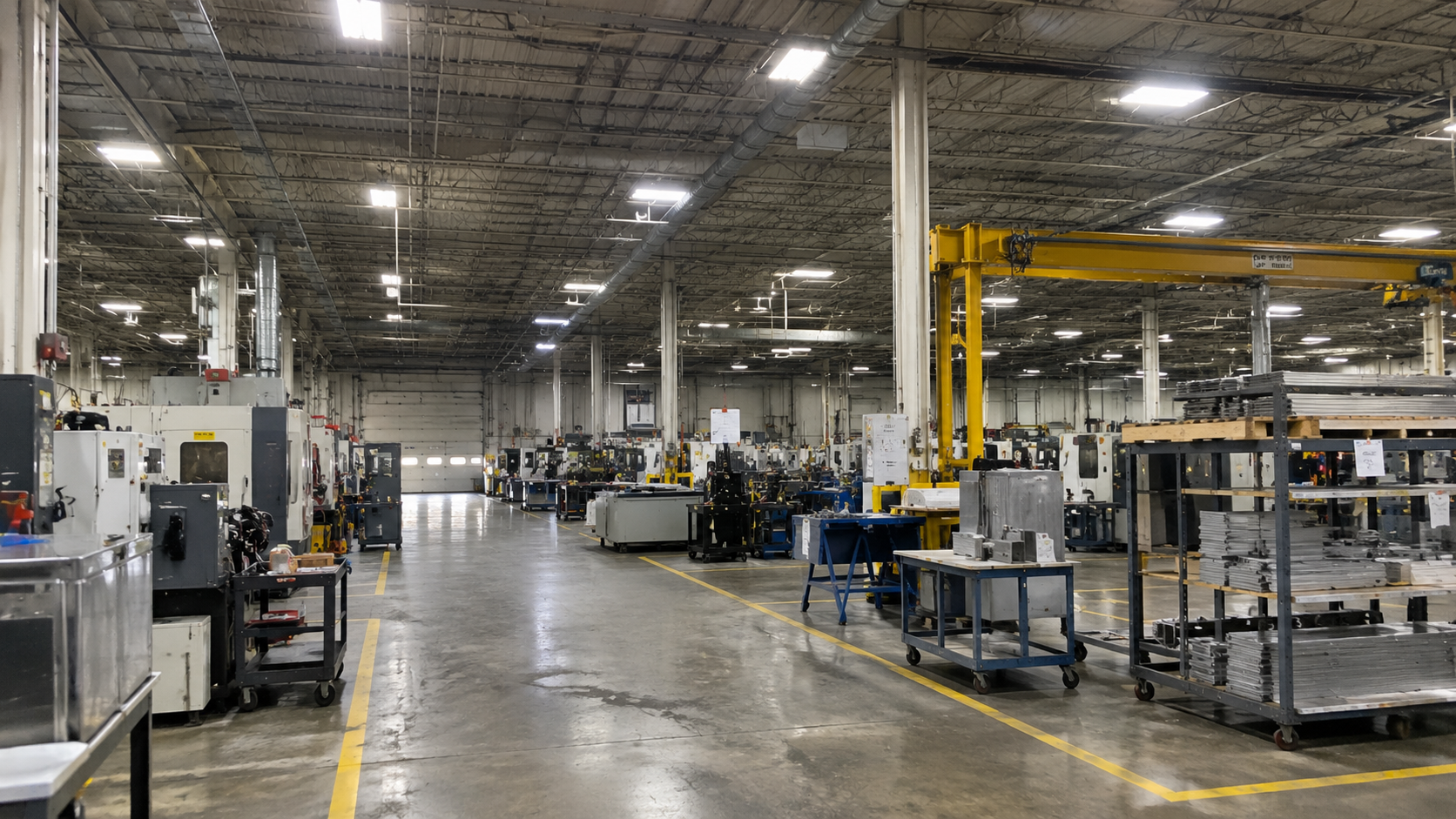
Equipment placement, material handling routes, staging areas, and available floor space all influence how efficiently production moves between operations. As manufacturing requirements change, these physical conditions can create delays and congestion that restrict output, even when individual machines have available capacity.
Before investing in additional equipment or space, manufacturers should determine whether their existing facility is limiting production performance and what improvements could increase capacity.
What Is Manufacturing Throughput?
Manufacturing throughput is the quantity of finished products a production system produces over a defined period, typically measured in units per hour, shift, or day.
Although equipment speed influences throughput, total output depends on how effectively operations work together. A machine capable of producing 100 units per hour does not guarantee that the facility can consistently deliver 100 finished units per hour.
Materials must arrive when needed, products must move between operations, and downstream processes must be capable of handling the output. When one part of the system cannot maintain the required pace, it can limit overall production.
Installed equipment capacity and achievable manufacturing throughput are not necessarily the same.
How Does Facility Layout Affect Manufacturing Throughput?
Facility layout affects manufacturing throughput by determining how equipment, materials, people, and products move through the production environment.
A layout that once supported production requirements may become less effective as manufacturers introduce new equipment, increase production volumes, or change their product mix. These adjustments can alter material movement and space requirements without corresponding changes to the facility.
Several physical conditions can influence production line efficiency.
Equipment Placement and Production Sequence
Equipment positioned far apart or outside the natural production sequence can create unnecessary movement between operations. For example, a component may travel across the facility for machining, return to another area for inspection, and then move back across the floor for assembly. Each transfer introduces additional handling requirements and potential delays.
Evaluating equipment placement in relation to the production sequence can reveal opportunities to reduce travel and improve continuity between operations.
Material Handling and Transportation Routes
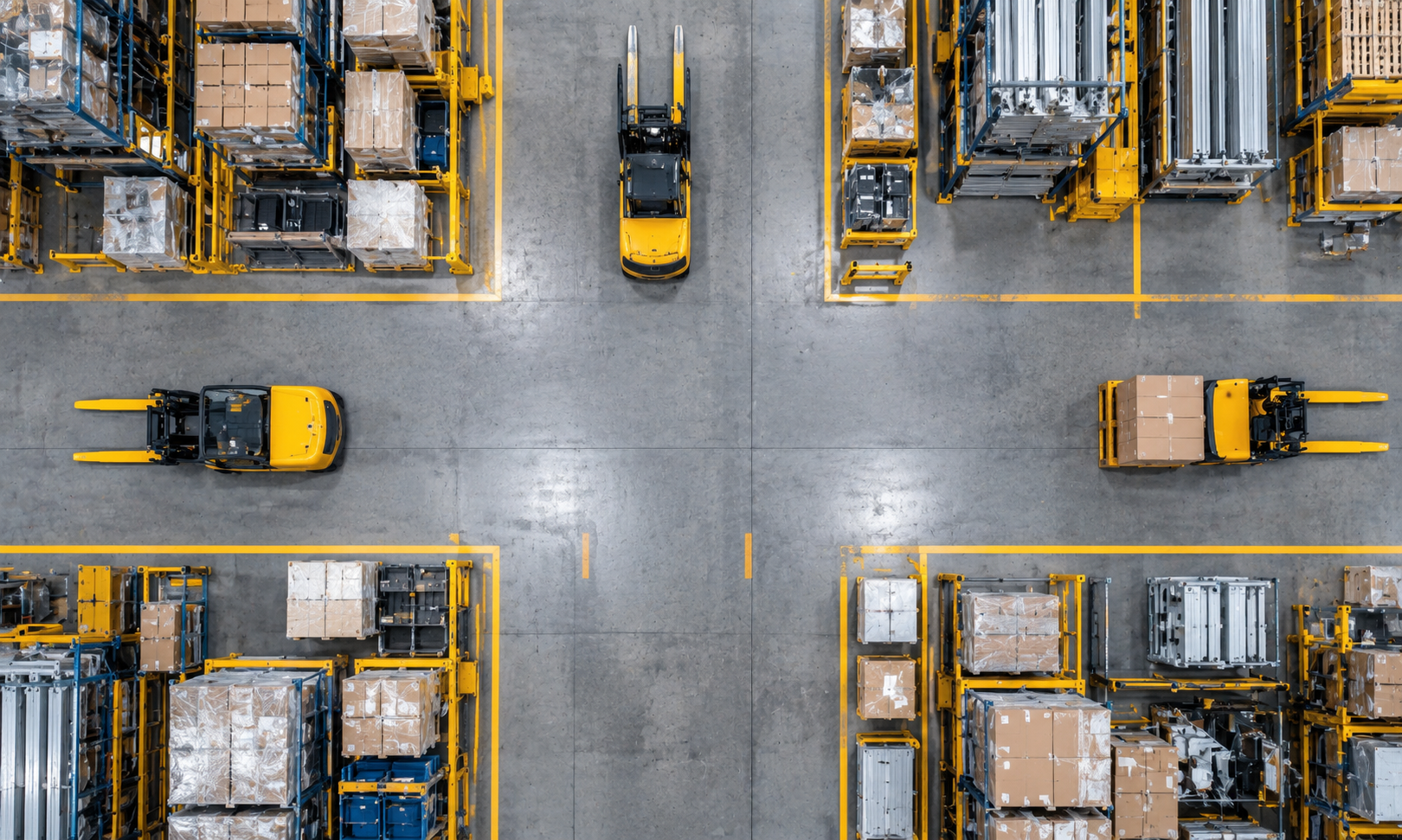
Long transportation distances, intersecting forklift routes, and shared aisles can create congestion, particularly when multiple production areas depend on the same material handling paths.
Material flow optimization examines how raw materials, work-in-process inventory, and finished goods travel through the facility. The objective is to identify unnecessary movement and determine whether existing transportation routes can support production requirements.
Staging Areas and Work-in-Process Inventory
Production areas need sufficient space for materials waiting to enter or leave an operation.
When staging areas are undersized or poorly positioned, work-in-process (WIP) inventory may accumulate near equipment, in aisles, or in spaces not intended for storage.
These conditions can restrict access and interfere with material handling. However, WIP buildup does not automatically indicate a layout problem. It may also result from processing capacity differences, scheduling, or equipment availability.
Identifying the underlying constraint is necessary before making physical changes.
Common Facility-Related Production Bottlenecks
Manufacturing bottlenecks occur when a constraint limits the rate at which work moves through a production system. While some bottlenecks result from equipment performance or labor availability, others are influenced by the physical configuration of the facility.
Common facility-related constraints include:
Congested material handling routes: Shared aisles and intersecting traffic patterns delay movement between production areas.
Poorly positioned equipment: Excessive distances or indirect movement between sequential operations increase handling time.
Insufficient staging space: Materials accumulate around workstations and interfere with production activities.
Restricted equipment access: Limited clearance complicates loading, unloading, maintenance, or operator movement.
Disconnected production areas: Operations that depend on one another are separated by facility features or competing uses of space.
Limited flexibility: Existing equipment arrangements make it difficult to accommodate changes in production volume or process requirements.
These constraints may develop gradually as manufacturers add equipment or modify operations within an existing building.
The challenge is determining which conditions are inconveniences and which are actually restricting production output.
How to Identify Facility Layout Constraints That Limit Manufacturing Throughput
Determining whether facility layout is restricting throughput requires more than observing where production slows down.
A bottleneck may appear at one workstation even when its underlying cause originates elsewhere. For example, a machine may regularly wait for materials because the transportation route serving it is congested, rather than because the machine lacks sufficient processing capacity.
Manufacturers can investigate potential facility constraints through four steps.
1. Document Existing Facility Conditions
Begin with an accurate representation of equipment locations, workstations, storage areas, aisles, and material handling routes.
Existing drawings may not reflect equipment additions, relocations, or other modifications made over time. When accurate documentation is unavailable, 3D laser scanning can capture current physical conditions and support the development of updated facility models.
This establishes a reliable foundation for evaluating how production operates within the available space.
2. Evaluate Production and Material Flow Data
Production data helps distinguish physical constraints from equipment-related or operational issues.
Useful measurements include:
Actual throughput compared with required production output
Cycle times and available capacity at individual operations
WIP accumulation and queue locations
Material travel distances and transportation times
Equipment utilization and downtime
Frequency of material handling delays
Reviewing these measurements together can help identify where production flow becomes restricted and whether the physical layout contributes to the problem.
3. Validate Findings on the Production Floor
Data should be compared with actual operating conditions. Observing material movement, equipment access, staging practices, and traffic patterns can reveal constraints that are not immediately apparent in production reports.
Input from operators, maintenance personnel, and material handling teams can also help identify recurring disruptions.
4. Evaluate the Constraint Before Recommending Changes
Not every production bottleneck requires equipment relocation or facility redesign. If a machine lacks sufficient processing capacity, moving it may not increase throughput. Likewise, reducing material travel distances may have little effect on total output if another operation remains the limiting factor.
Engineering analysis should establish whether a proposed facility change addresses a constraint that affects overall production performance.

How Can Manufacturers Increase Throughput Without Adding Equipment?
Once the limiting factors have been identified, manufacturers can evaluate opportunities to improve production output using existing equipment and facility resources. The appropriate solution depends on the nature of the constraint.
Reconfigure equipment placement. Relocating selected workstations may reduce unnecessary transportation, improve access, or create a more direct production sequence.
Improve material handling routes. Separating conflicting traffic patterns, reducing travel distances, or adjusting material delivery locations may help materials reach operations more consistently.
Reevaluate staging and storage areas. Positioning materials closer to where they are needed, while maintaining appropriate access and safety clearances, can reduce interruptions and unnecessary handling.
Balance production operations. Comparing processing capacity across workstations can reveal opportunities to redistribute work or adjust how production moves between operations.
Improve coordination between production areas. Changes to material replenishment, transfer timing, or workflow can sometimes reduce delays without modifying equipment.
These improvements should be evaluated against the system's actual constraint. Increasing the efficiency of an individual operation does not necessarily increase overall manufacturing throughput.
Using Simulation to Evaluate Facility Improvements
Proposed changes to a manufacturing facility can affect multiple operations, making it difficult to predict their impact through observation alone. Simulation engineering provides a way to evaluate production scenarios before implementing physical changes.
Depending on the application, manufacturers can model equipment capacities, processing times, material movement, resource availability, and interactions between production operations. For example, a manufacturer considering the relocation of several workstations may want to understand whether the new arrangement will reduce transportation delays or simply move congestion to another part of the facility.
A simulation model can help compare scenarios using measures such as:
Expected production throughput
Equipment and resource utilization
WIP levels and queue lengths
Material handling requirements
Potential production constraints
These evaluations support decisions about equipment placement, production line configuration, and future capacity requirements.
Simulation results depend on the accuracy of the assumptions and operating data used. They should be treated as decision-support information rather than guaranteed production outcomes.
When Should a Manufacturer Consider Facility Expansion?
Improving manufacturing throughput within an existing facility may delay or reduce the need for expansion, but it cannot eliminate every physical capacity limitation.
Expansion becomes a consideration when sustained production requirements exceed what the existing operation can reasonably support, even after practical improvements have been evaluated.
Potential indicators include:
Available floor space cannot accommodate required equipment or production areas.
Building infrastructure or utility capacity limits future production requirements.
Material handling and storage needs exceed what the existing facility can safely support.
Projected demand requires capacity beyond achievable improvements to current operations.
Reconfiguring the existing facility introduces unacceptable operational disruption or cost.
Before committing to expansion, manufacturers should compare the capacity, cost, operational impact, and long-term flexibility of available alternatives.
Facility master planning can support this evaluation by connecting production requirements with space utilization, infrastructure needs, capital investment, and future growth scenarios. The objective is not necessarily to avoid expansion, but to determine when it is justified and how it should support the broader manufacturing operation.
Improving Manufacturing Throughput Starts with Understanding the Facility
Existing facility conditions can sometimes restrict how effectively available production resources are used.
Evaluating equipment placement, material flow, staging requirements, and production capacity helps manufacturers distinguish physical constraints from other operational limitations.
At DSI, our engineering teams support manufacturers through facility layout and design, material flow analysis, simulation engineering, and facility master planning. These capabilities help organizations evaluate existing operations, compare improvement alternatives, and make informed decisions about production capacity and future investments.
Looking to increase manufacturing throughput within your existing facility? Contact Us to discuss your production constraints and evaluate potential engineering solutions.