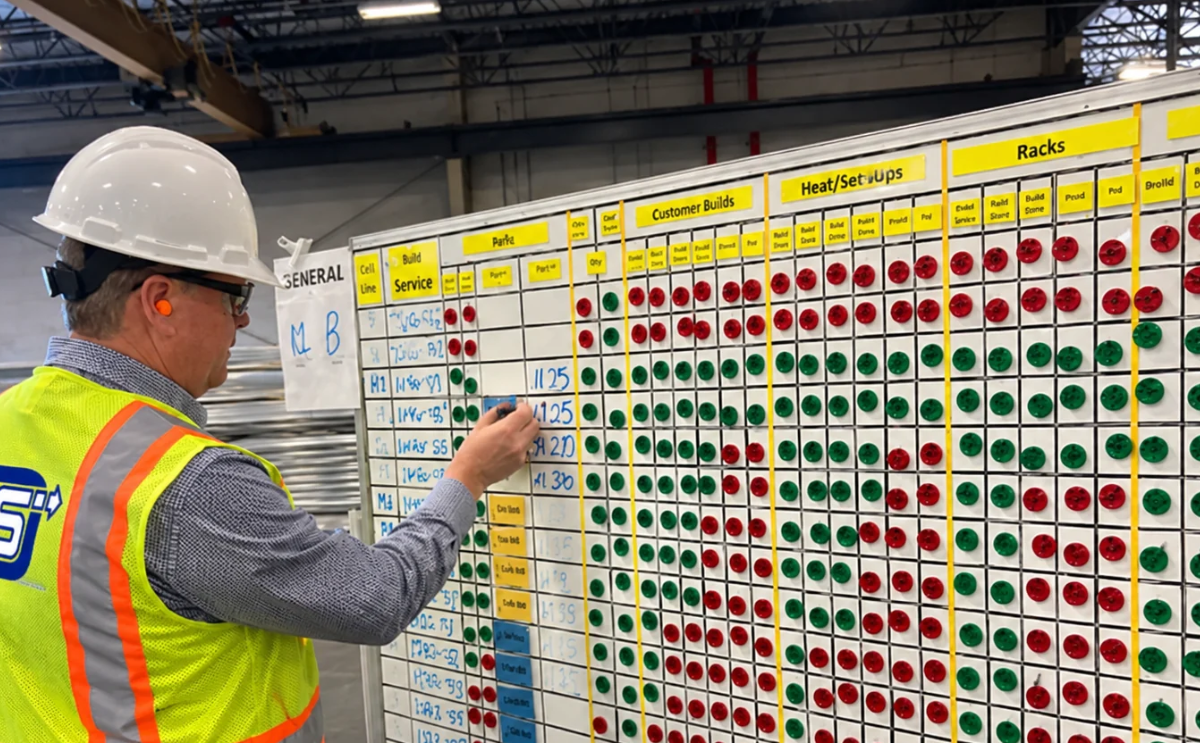
Manufacturing Process Improvement: Why Problems Keep Coming Back
November 11, 2026Manufacturers invest significant time and resources into improving production performance. Equipment is upgraded, workflows are adjusted, and corrective actions are implemented to address downtime, quality issues, and production delays. Yet many facilities continue to experience the same operational challenges, even after improvement initiatives appear successful.
A production bottleneck may be temporarily resolved, only to reappear when demand increases. Scrap rates may decline following a corrective action, then gradually rise again. Overtime may help a facility meet short-term production targets without addressing the conditions that made additional labor necessary.
These recurring challenges raise an important question: Are manufacturers correcting individual problems, or addressing the underlying conditions that allow them to return?
Effective manufacturing process improvement requires more than isolated adjustments. It requires understanding how processes, equipment, people, information, and operating practices interact across the manufacturing system.
Explore the Bigger Picture
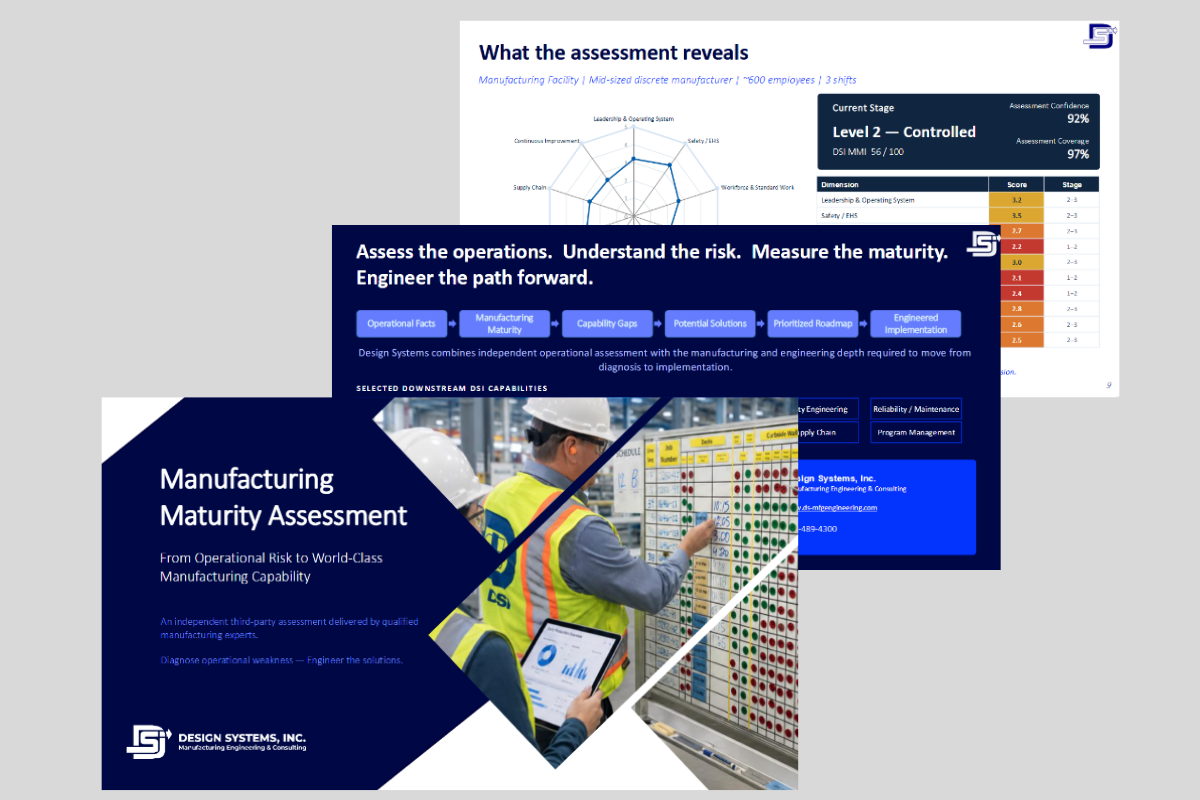
Want a closer look at how we evaluate manufacturing performance? Explore our Manufacturing Maturity Assessment overview to learn how we identify operational capability gaps and prioritize improvements.
Why Manufacturing Problems Keep Coming Back
Production challenges rarely occur independently. A delay in one area can affect material availability, equipment utilization, labor requirements, and downstream operations.
Consider a facility experiencing frequent production schedule disruptions. Management may initially attribute the problem to equipment downtime or insufficient staffing. However, further investigation could reveal inconsistent production planning, unreliable material replenishment, or poorly coordinated processes.
Common indicators of recurring operational problems include:
Missed production targets: Output consistently falls below planned requirements despite overtime or additional resources.
Excess work-in-process (WIP): Inventory accumulates between operations because production rates, material movement, or scheduling are not properly coordinated.
Unplanned downtime: Equipment interruptions repeatedly affect production, even after individual maintenance issues are addressed.
Scrap and rework: Quality problems continue to generate additional labor, material consumption, and production delays.
Schedule instability: Frequent changes, expediting, and reactive decision-making interfere with planned execution.
While each issue may require immediate attention, repeatedly correcting visible symptoms does not necessarily resolve the conditions causing them.
Sustainable improvement begins by examining how these challenges are connected.
Why Traditional Process Improvements Sometimes Fall Short
Many manufacturing improvement initiatives focus on a specific workstation, process, or performance metric. These targeted efforts can deliver meaningful results, but their impact may be limited when the surrounding manufacturing system is not considered.
For example, increasing the speed of one production operation may improve its individual cycle time. However, if a downstream process cannot accommodate the additional output, the improvement may simply increase WIP rather than overall throughput.
Similarly, adding labor to a constrained production area may temporarily increase capacity without correcting the scheduling, material flow, or process reliability issues responsible for the constraint.
The challenge is not necessarily the improvement itself. It is the absence of a broader understanding of how that improvement affects the operation.
A comprehensive approach to Manufacturing Strategy and Operational Excellence considers both individual processes and their relationships within the overall production system.
This helps manufacturers distinguish between improvements that address immediate performance concerns and those that strengthen the operation's ability to perform consistently over time.
The Role of Root Cause Analysis in Manufacturing
Root cause analysis in manufacturing provides a structured approach to understanding why operational problems occur and what conditions allow them to continue.
Rather than focusing exclusively on the immediate failure, the objective is to identify the underlying factors contributing to the problem.
The American Society for Quality (ASQ) describes root cause analysis as a collection of methods used to identify the underlying causes of problems and support corrective action.
In manufacturing, this may involve examining production data, observing operations, interviewing personnel, and evaluating relationships between processes.
From Symptoms to Underlying Causes
Consider a production line experiencing repeated material shortages.
The immediate response may involve expediting deliveries or increasing inventory. Although these actions can restore production, they may not address the underlying issue.
A structured investigation could reveal several contributing factors:
Inaccurate inventory records or inconsistent material tracking.
Production schedules that do not reflect actual consumption rates.
Unclear replenishment responsibilities between departments.
Material handling processes that create delays between storage and production.
Each potential cause requires validation before corrective action is selected.
Tools such as process mapping, the Five Whys, cause-and-effect diagrams, and production data analysis can support this investigation.
However, identifying a root cause is only part of the process. Manufacturers must also implement appropriate corrective actions and monitor whether those changes deliver sustained results.
The objective is to reduce the likelihood that the same problem will continue disrupting operations.
Common Capability Gaps That Limit Manufacturing Performance
Recurring production problems can indicate broader weaknesses in the capabilities supporting daily operations.
These gaps may not always be visible through individual performance metrics, particularly when teams compensate for inconsistent processes through overtime, manual intervention, or informal workarounds.
Several operational capabilities deserve consideration during manufacturing process improvement initiatives.
Process Standardization and Control
When procedures vary between shifts, operators, or departments, production performance can become inconsistent. Documented work standards, defined responsibilities, process controls, and reaction plans help establish repeatable execution.
Without these foundations, improvements may depend heavily on individual experience rather than consistent operating practices.
Production Planning and Scheduling
A production schedule is only as reliable as the information and capabilities supporting it.
Inaccurate cycle times, unclear capacity assumptions, inconsistent material availability, and poorly coordinated resources can create instability throughout the facility.
Improving scheduling performance may require evaluating these underlying conditions rather than repeatedly adjusting the production plan.
Material Flow and Production Constraints
Manufacturing bottlenecks can develop from equipment limitations, process imbalances, material handling inefficiencies, or inadequate coordination between operations.
Identifying the true constraint requires understanding how materials and work move through the entire production system. Industrial engineering methods, including capacity analysis, line balancing, and material flow evaluation, can help manufacturers determine where changes may deliver the greatest operational benefit.
Our Industrial Engineering capabilities support this type of system-level evaluation, connecting process analysis with practical engineering solutions.
Equipment Reliability and Maintenance
Repeated equipment interruptions can indicate gaps in maintenance planning, equipment condition monitoring, or operational procedures.
Reliable equipment performance depends on more than repairing individual failures. It also requires the information, processes, and maintenance practices needed to manage equipment condition over time.
Performance Measurement and Accountability
Manufacturers may collect extensive production data without having a consistent process for translating that information into operational decisions.
Effective performance management requires clearly defined metrics, reliable data, established responsibilities, and appropriate responses when performance deviates from expectations.
Without these elements, organizations may recognize problems without having a repeatable method for addressing them.
Why More Automation Isn't Always the Answer
Automation, robotics, and digital manufacturing technologies can create significant opportunities to improve productivity, consistency, and operational visibility.
However, technology investments are most effective when they address clearly defined operational requirements.
Automating an inconsistent process does not automatically resolve the planning, material flow, or management practices contributing to its instability.
For example, installing automated material handling equipment may improve transportation efficiency. But if inventory accuracy, replenishment rules, or production scheduling remain unreliable, the operation may continue experiencing shortages and interruptions.
Before committing to major technology investments, manufacturers should evaluate whether their existing processes and operating practices can support the proposed solution.
This includes understanding current performance, identifying process constraints, establishing reliable data, and defining the intended operational outcome.
Technology can enable manufacturing maturity, but it cannot replace the operational discipline required to sustain improvement.
Building a More Sustainable Manufacturing Improvement Strategy
Long-term manufacturing operational efficiency depends on a structured approach that connects problem identification with implementation and performance monitoring.
Rather than treating every operational challenge as a separate improvement project, manufacturers can benefit from evaluating the broader capabilities influencing performance.
A practical improvement strategy should include five considerations:
Establish the current state. Evaluate actual production performance using operational data, process observations, and input from personnel directly involved in execution.
Identify underlying capability gaps. Determine whether recurring problems are associated with process controls, planning practices, equipment reliability, material flow, or other operational conditions.
Prioritize improvement opportunities. Consider potential business impact, operational risk, implementation effort, and dependencies between proposed changes.
Implement coordinated solutions. Align engineering, operations, maintenance, and management teams around defined actions, responsibilities, and performance expectations.
Monitor results and sustain improvements. Establish measurable indicators and management routines that help confirm whether changes are producing the intended results over time.
These steps support a shift from reactive problem-solving toward more disciplined, repeatable operational performance.
What System-Level Improvement Can Deliver
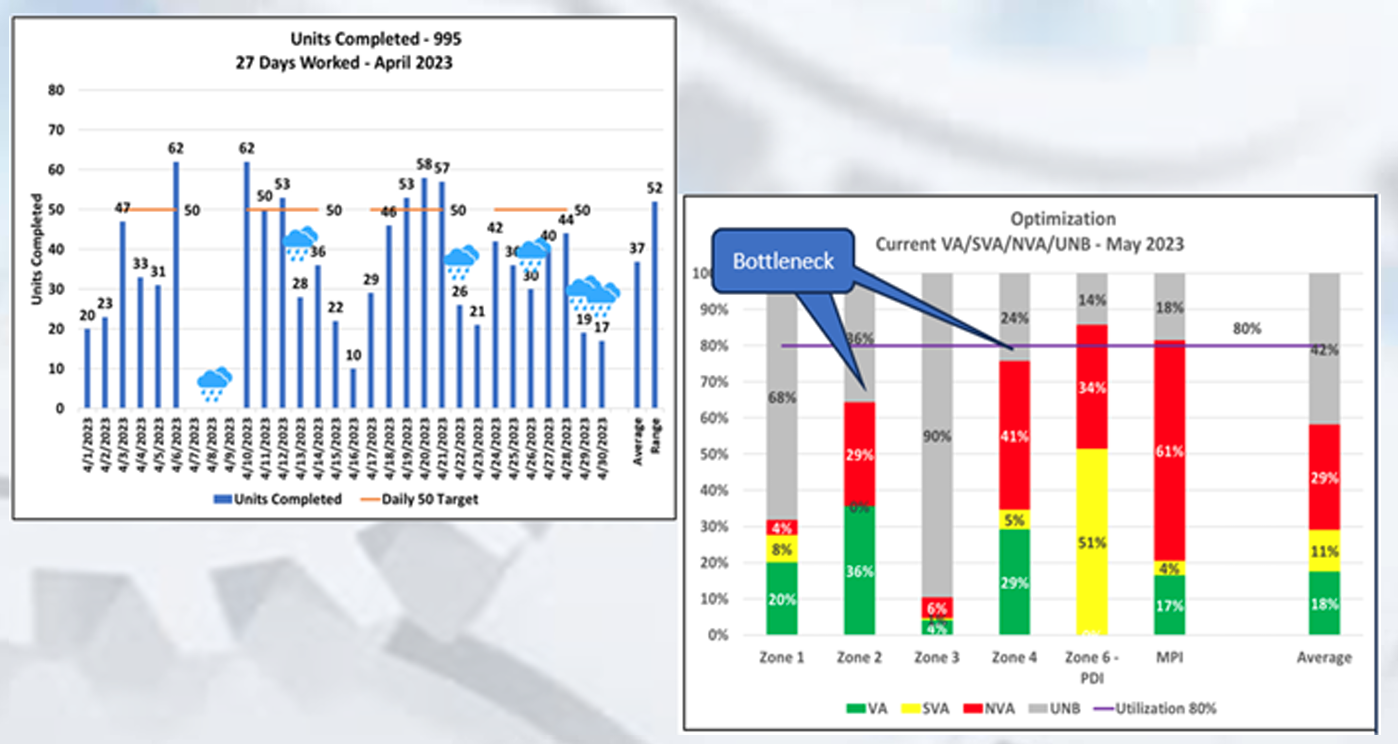
The value of coordinated manufacturing improvements can be seen in our work with a multinational industrial equipment manufacturer experiencing operational waste, production delays, and challenges with staffing and workload balancing.
We conducted a current-state assessment to identify root causes of inefficiency and production bottlenecks. Using value stream mapping and Yamazumi analysis, our team developed and implemented improvements involving workforce rebalancing, standardized work, and production buffering strategies.
The project achieved:
20% reduction in annual overtime hours.
32% increase in productivity.
$12.5 million in annual savings following implementation.
These results demonstrate how identifying underlying operational constraints and implementing coordinated improvements can deliver measurable manufacturing performance gains.
 Explore the full Multinational Industrial Equipment Manufacturer case study.
How a Manufacturing Maturity Assessment Supports Lasting Improvement
When recurring production problems persist despite corrective actions, manufacturers may need a more comprehensive understanding of their operational capabilities.
A Manufacturing Maturity Assessment (MMA) provides a structured, evidence-based evaluation of how effectively a manufacturing operation is equipped to perform today and support future requirements.
At Design Systems, Inc., our assessment combines operational data, on-site observation, and engineering expertise to evaluate the processes, systems, resources, and operating practices influencing manufacturing performance.
Using our Manufacturing Maturity Index, we assess operational maturity across five levels, from Uncontrolled to Optimized, to identify systemic weaknesses, operational risks, and capability gaps.
The assessment produces a prioritized, actionable improvement roadmap that considers business impact, operational risk, implementation effort, and dependencies between recommended improvements.
This provides manufacturers with a clearer understanding of where to focus resources, which improvements should take priority, and how to build stronger operational capabilities over time.
Manufacturing process improvement should do more than solve today's production problems. It should build the capabilities needed to prevent those problems from repeatedly returning.
Learn how our Manufacturing Maturity Assessment can help your organization identify operational gaps, prioritize improvement opportunities, and establish a clearer path toward sustainable manufacturing performance.